

 DISCOVER MARINA ZAMORA
Integrating the TV into the living room while maintaining the overall harmony of the space
For decades, living room design followed an unwritten but fairly immutable rule: the entire space revolved around the TV. The sofa, the orientation of the lights, the placement of outlets, and even the overall layout were all designed to face the screen.
However, in our studio, we’re seeing this change. More and more clients are expressing the same concern: “We want to have a TV, but we don’t want the living room to revolve around it because it disrupts the harmony of the space.” It’s a logical concern. When you design your home, you aim to create a peaceful space with warm materials and thoughtful lighting—and then, suddenly… there’s that dark box dictating the aesthetics even when it’s turned off.
Today, integrating the TV into the living room involves more than just choosing a free wall. The TV and the decor must coexist without the screen becoming the absolute centerpiece of the room.
The living room is now a multitasking space. We want it to invite conversation, reading, unwinding with a cup of coffee, or listening to music. We consume content differently (on laptops, tablets, or cell phones), so the TV no longer needs to be the absolute centerpiece of the room.
The Challenge of Interior Design: Integrating the TV into the Décor Without Compromising the Design
The solution doesn’t necessarily have to involve completely getting rid of the TV (although some people choose to live without it and prioritize a bookshelf instead). For most people, the challenge lies in finding the right balance: maintaining the convenience of a screen without sacrificing visual tranquility.
At Sezam, we don’t believe in one-size-fits-all solutions; it all depends on how each client lives. That said, these are the three options that work best for us in projects when we aim to seamlessly integrate the TV into the decor.
1. Custom-made furniture
This is the option we most often recommend. It’s not about doing without a TV, but about integrating it seamlessly.
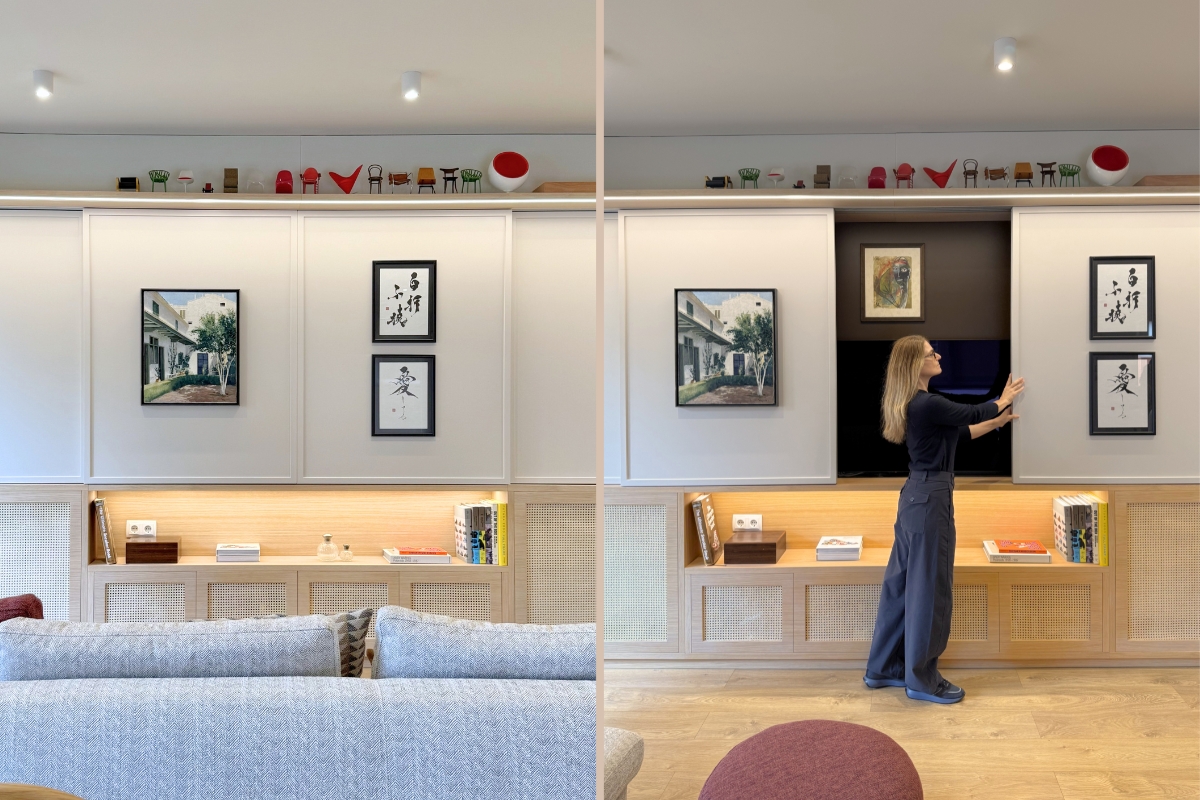
We design furniture with sliding panels or retractable doors so that the screen is only visible when it’s being used. Hiding the TV doesn’t mean giving it up; it means letting it disappear when it isn’t adding anything to the space.
We did this, for example, in a project in the Gràcia neighborhood. The living room needed to feel more organized and stylish and make better use of natural light, so we designed a piece of furniture that, when closed, completely concealed the TV while also serving as a mount for hanging artwork. With this solution, the space immediately feels more harmonious, organized, and peaceful.
2. Short-throw projectors
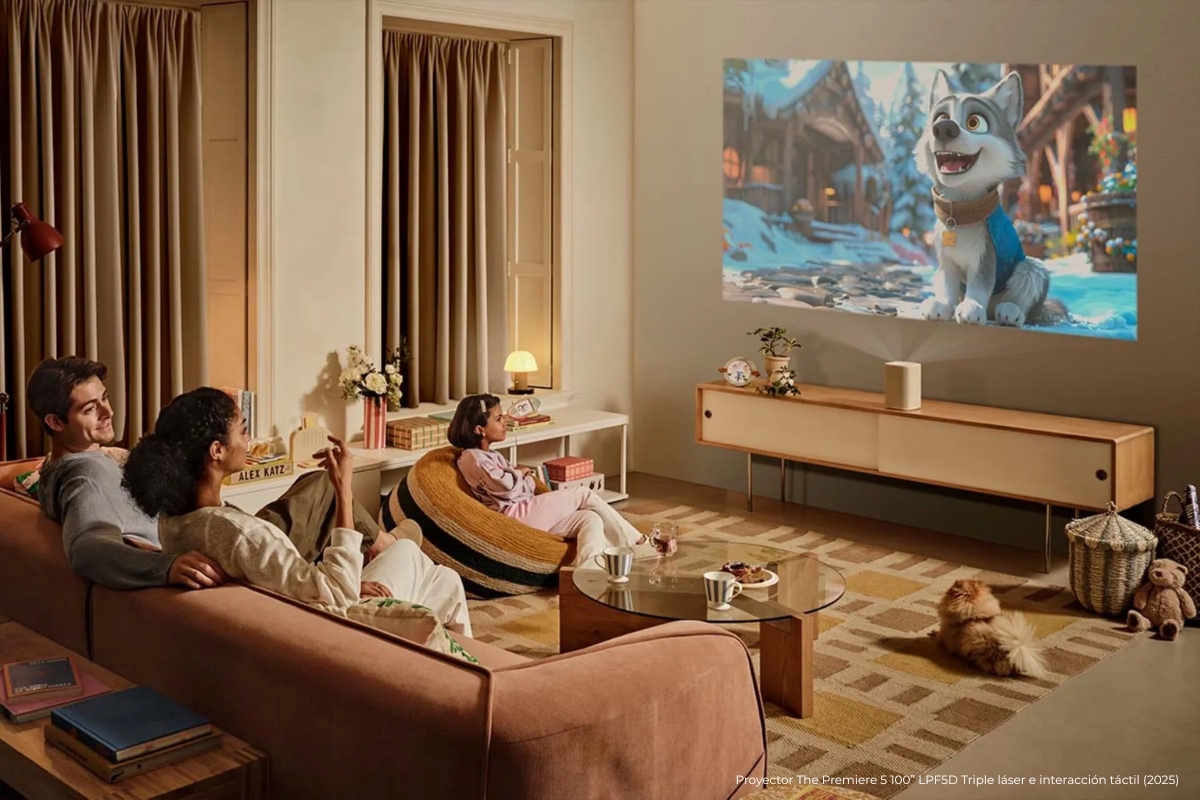
A few years ago, installing a projector in a home was almost considered an eccentricity among movie buffs. Today, it’s a viable and very sleek option from an interior design perspective.
For those looking for ways to display a TV without taking up an entire wall, today’s short-throw projectors—what we in the industry call Laser TVs—rest on a stand just a few centimeters from the wall. Brands like Samsung, with its The Premiere model featuring a meticulously crafted fabric design, or Hisense, offer impeccable image quality.
The question we’re always asked is whether they look good during the day. The answer is yes, as long as they’re paired with high-contrast technical screens (ALR or CLR). Specialized brands like Elite Screens manufacture fixed screens with nearly invisible frames or, better yet, motorized screens that emerge from the floor or from inside the cabinet and disappear completely when turned off.
Of course, this solution requires planning from the very start of the renovation project to account for hidden installations, audio, and proper distances.
3. Motorized Systems
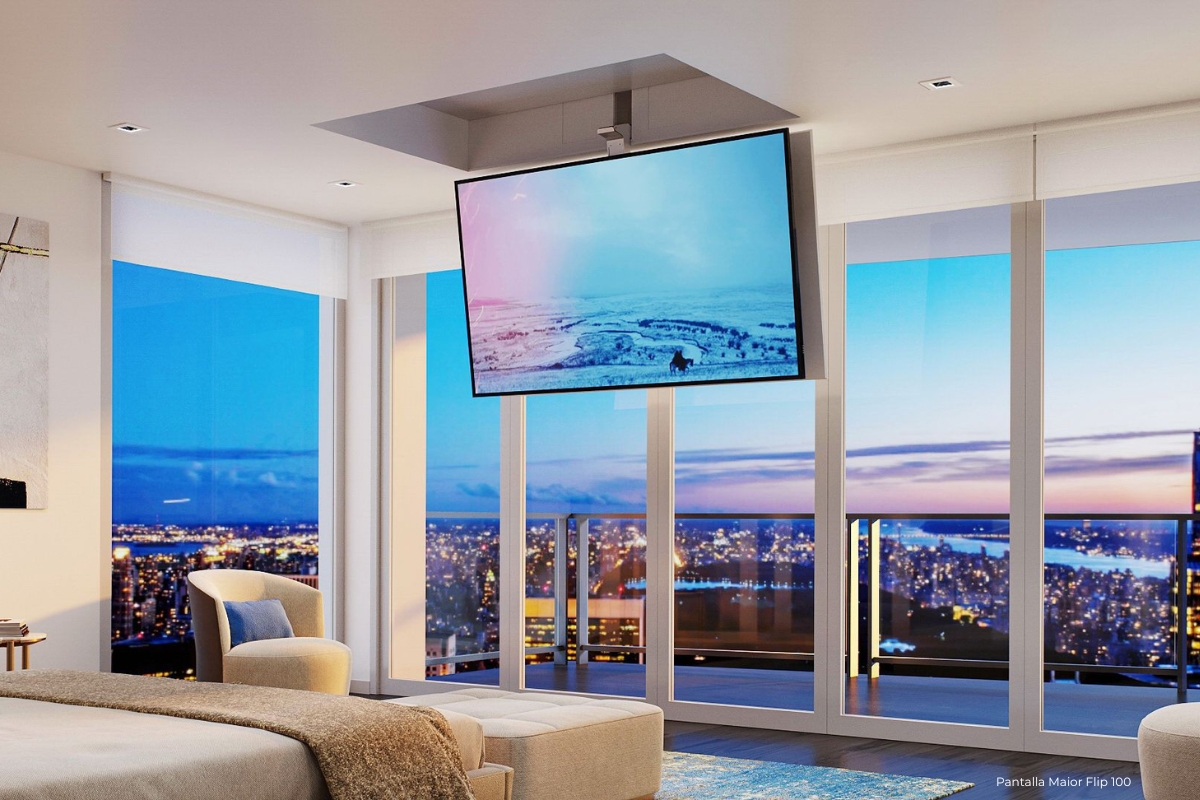
For projects with a more flexible budget, automated systems are a great option. These are mechanisms that allow the TV to be hidden in the ceiling or to emerge from a low cabinet using a motor. They are very visually clean solutions because they keep the walls completely clear, although their installation is technically more complex and requires a larger investment.
So… where is television headed in our homes?
The future doesn’t necessarily mean creating “anti-TV” living rooms. The future means stopping designing homes around the TV.
When a room is freed from the need to focus on a single fixed point, new layout possibilities open up. People, views of the outdoors, that teleworking corner that didn’t fit before, or that area with sofas facing each other—which invites conversation or comfortable relaxation—begin to take center stage.
At Sezam, we believe that a good interior design project isn’t about imposing a trend or a specific lifestyle. It’s about listening to how you want to live and designing the space to enhance that.
Integrating the TV into the living room isn’t always about hiding it, but rather deciding what role it should play in how you experience your home. Sometimes it will be there. Sometimes it will disappear. And sometimes, to truly connect with your home, the first step is simply to stop looking at the same spot you always do.


